Robotics in Security & Surveillance
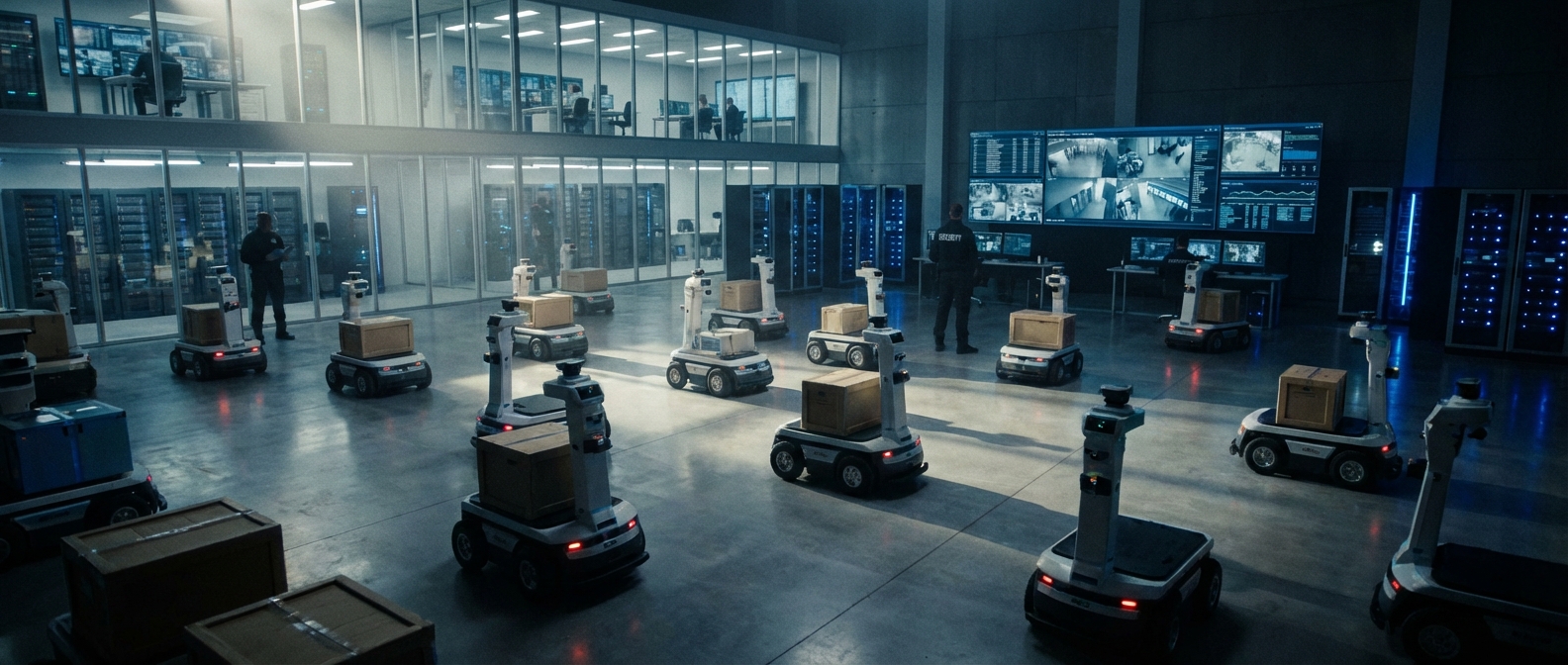
The landscape of physical security is shifting from static monitoring to dynamic, autonomous vigilance. Advanced robotics and AI analytics are now empowering organizations to achieve 24/7 situational awareness, reducing blind spots and reaction times while keeping human personnel out of harm's way.
Why Robotics Matters Here
Eliminating Blind Spots
Static cameras leave coverage gaps. Mobile robots patrol dynamic routes, offering 360-degree views and checking areas fixed sensors cannot reach.
24/7 Reliability
Security fatigue is a major vulnerability. Robots operate continuously without loss of focus, ensuring the same level of vigilance at 3 AM as at 3 PM.
Hazardous Environments
Deploy robots in areas with chemical risks, extreme temperatures, or unstable structures, keeping human officers safe during initial inspections.
Rapid Response
Robots can immediately investigate triggered alarms, providing real-time video feeds to command centers before human personnel arrive on scene.
Cost Efficiency
Augmenting security teams with robots reduces overtime costs and allows human guards to focus on high-value cognitive tasks rather than routine patrols.
Data & Analytics
Beyond video, security robots collect environmental data, check thermal anomalies, and log incidents digitally for better compliance reporting.
Applications in Security & Surveillance
Security Patrol
Learn how security patrol transforms security & surveillance by automating perimeter checks.
Explore Application →Inspection & Monitoring
Learn how inspection & monitoring transforms security & surveillance through thermal and visual anomaly detection.
Explore Application →Parking Lot Management
Learn how parking lot management transforms security & surveillance via license plate recognition and occupancy tracking.
Explore Application →How to Deploy Autonomous Security
Implementing robotics in security begins with a thorough site assessment. We map your facility using LiDAR to create "digital twins," identifying high-risk zones, necessary patrol routes, and optimal charging station locations. This ensures the robot can navigate autonomously without disrupting daily operations.
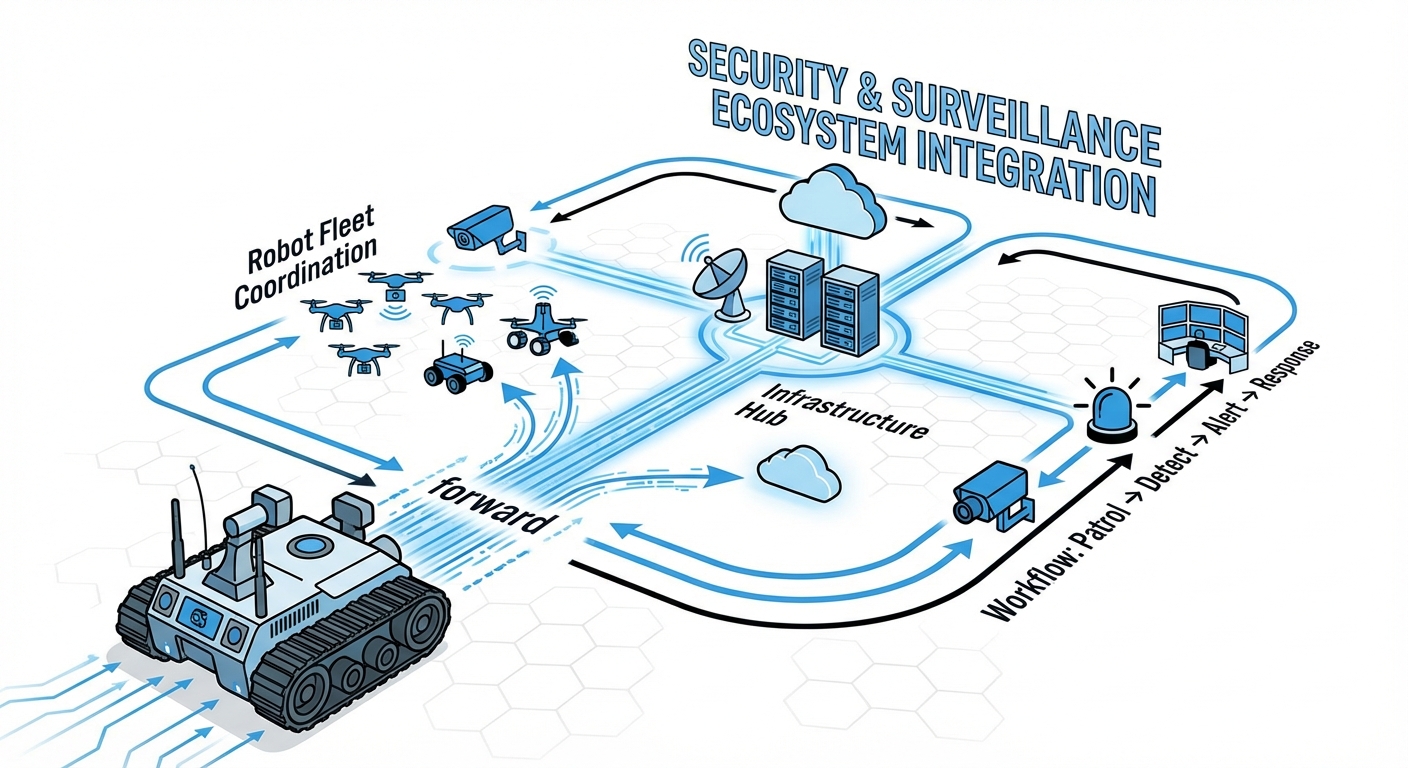
Next, integration is key. Modern security robots don't operate in a vacuum; they connect directly to your existing Video Management Systems (VMS) and Access Control units. This allows the robot to act as a mobile sensor node, feeding data into your central command center instantly.
Finally, we establish "Man-Machine Teaming" protocols. Your security personnel are trained to interpret robotic data and utilize the robots as first responders. This phase defines the rules of engagement—when the robot should sound an alarm, when it should remain silent, and how it hands off incidents to human officers.
Success Stories
Securing Critical Infrastructure
Challenge: Overheating servers and unauthorized access risks in a 50,000 sq ft facility.
Solution: Deployed thermal-imaging patrol robots for hourly temperature scans and perimeter checks.
Results: Detected 12 pre-failure heat anomalies; 100% reduction in unauthorized entry attempts.
Perimeter Defense at Night
Challenge: Repeated cargo theft from a dimly lit outdoor storage yard.
Solution: Rugged outdoor robots with night vision and strobe deterrents patrolling the fence line.
Results: Theft incidents dropped to zero within 3 months; insurance premiums reduced by 15%.
Hazardous Leak Detection
Challenge: Protecting staff from potential toxic gas leaks during routine gauge checks.
Solution: Robots equipped with gas sniffers and 30x zoom cameras to read gauges remotely.
Results: Eliminated human exposure to Class 1 Div 1 zones for routine monitoring.
Visitor Management & Safety
Challenge: High cost of maintaining visible security presence in a large shopping complex.
Solution: Friendly, highly visible concierge robots that double as surveillance units.
Results: Tenant satisfaction increased by 25%; security labor costs optimized by 30%.
Industry-Specific Questions
Do these robots replace human security guards?
No, they are designed to augment human teams. Robots handle the dull, dirty, and dangerous tasks—like 3 AM perimeter patrols or hazardous leak checks—allowing human officers to focus on decision-making, incident response, and complex problem-solving.
Can the robots operate in rain, snow, or extreme heat?
Yes. Our outdoor security robots are rated IP65 or higher, designed to withstand rain, snow, dust, and temperature ranges from -20°C to +50°C. They are equipped with all-terrain drivetrains to handle uneven surfaces found in parking lots and industrial yards.
How do the robots handle privacy and GDPR compliance?
Our systems are built with privacy by design. Features include real-time face blurring, encrypted data storage, and strict access controls. Data is typically processed locally on the edge or via secure private clouds, ensuring compliance with GDPR, CCPA, and NDAA regulations.
What happens if an intruder tries to damage the robot?
The robots are equipped with tamper detection sensors, accelerometers, and 360-degree cameras. If someone attempts to tip, cover, or attack the robot, it instantly triggers a high-priority alarm in the command center, records the perpetrator, and can activate audible sirens/strobes.
Can they detect weapons or specific threats?
Yes, utilizing advanced AI vision models, the robots can be configured to detect brandished weapons, aggressive behavior analysis, or specific objects (like suspicious packages). However, verify local laws regarding autonomous biometric surveillance.
Do I need to upgrade my WiFi network?
While a robust network helps, it is not strictly required for patrol. Robots can operate on 4G/5G LTE cellular networks or record data locally and sync when they return to a charging dock with WiFi connectivity. Critical alarms can be sent via low-bandwidth cellular signals.
How long does the battery last?
Most units operate for 8-12 hours on a single charge. They utilize "opportunity charging," meaning they autonomously return to their dock to top up during low-activity periods, ensuring near-continuous uptime.
Does it integrate with my existing VMS (Genetec, Milestone)?
Absolutely. We support ONVIF standards and have native plugins for major VMS platforms like Genetec, Milestone, and Avigilon. The robot appears as a mobile camera feed within your existing security dashboard.
Can the robot navigate elevators and multiple floors?
Yes, through IoT integration modules, robots can wirelessly call elevators, select floors, and navigate multi-story buildings. For facilities without smart elevators, we usually recommend one robot per floor or ramp access.
What is the typical deployment timeline?
A standard deployment takes 2-4 weeks. This includes site mapping (1-2 days), network configuration, setting up patrol routes, and training your security staff on how to interact with the interface.