Parking Lot Management
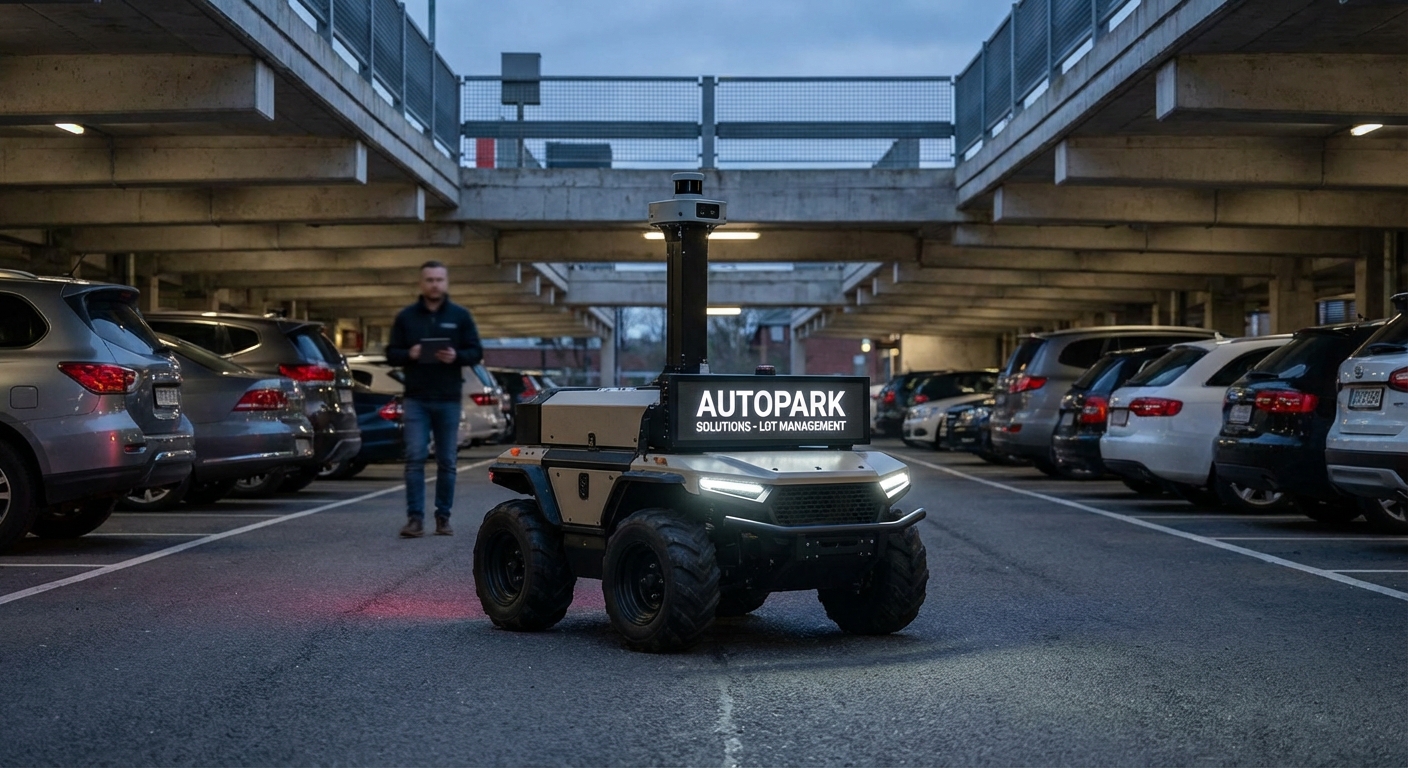
Revolutionize your facility operations with autonomous parking enforcement, real-time occupancy tracking, and security surveillance. Our robots deploy advanced LPR technology to maximize space utilization and ensure 24/7 lot safety without human intervention.
Why Automate Parking Lot Management?
Automated LPR
Instant License Plate Recognition allows for seamless validation of permits, payment verification, and identification of unauthorized vehicles.
Real-Time Analytics
Generate heatmaps of high-traffic zones and track occupancy rates in real-time to optimize pricing and space allocation.
Enhanced Security
Continuous 24/7 patrolling deters theft and vandalism while providing video evidence for any incidents that occur on the premises.
Cost Efficiency
Drastically reduce labor costs associated with manual ticketing and security guards, delivering a high ROI within months.
Find My Car
Improve customer experience by integrating with mobile apps to help visitors locate their parked vehicles using robot-collected geotags.
Cloud Sync
All data is instantly synchronized to the cloud, allowing facility managers to control fleets and view reports from any device, anywhere.
Autonomous Workflow
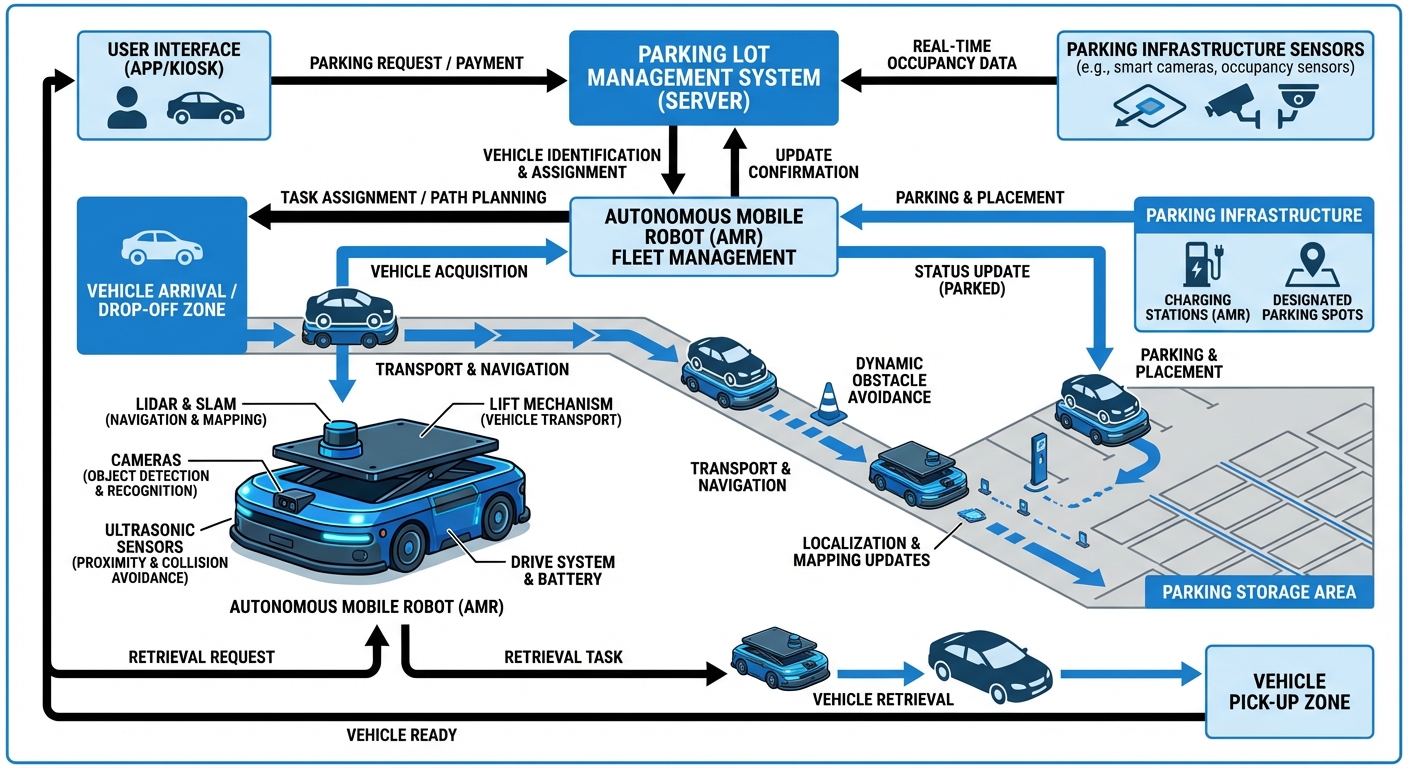
Our robots utilize a sophisticated combination of GNSS (GPS) and LiDAR SLAM navigation to patrol parking lots with centimeter-level precision. The robot autonomously follows a predefined route or adapts dynamically to avoid obstacles such as moving cars and pedestrians.
As the robot moves, onboard high-resolution cameras capture license plates at various angles. Edge AI processing instantly compares plates against your whitelist or payment database. If a violation is detected (e.g., overtime parking, double parking, or non-payment), the system logs the incident with a timestamp and photo evidence.
Finally, all data is pushed to the central command dashboard via 5G/4G or Wi-Fi. Operators receive instant alerts for security breaches, while enforcement officers are notified of specific locations for ticketing, streamlining the entire management lifecycle.
Where It's Used
Airports & Transport Hubs
Managing long-term parking, curbside security, and ensuring traffic flow in high-density drop-off zones.
Retail & Shopping Malls
Preventing employee parking in customer zones, enforcing time limits during peak hours, and providing night patrols.
Corporate Campuses
Verifying staff permits, managing visitor lots, and securing large perimeter areas during off-hours.
Event Venues & Stadiums
Rapidly validating parking entitlement for thousands of vehicles and assisting with post-event traffic analytics.
What You Need
| Component | Requirement |
|---|---|
| Robot Platform | Outdoor-rated chassis (IP65+) with all-terrain wheels and 8+ hour battery life. |
| Sensors | 360° LiDAR, GNSS/RTK Module for outdoor localization, 4x Wide-angle RGB Cameras for LPR. |
| Connectivity | Integrated 4G/5G Modem for continuous cloud sync; fallback Wi-Fi support. |
| Software Stack | Fleet Management System, Edge AI inference engine for LPR (YOLO/OpenCV based), Navigation Stack (ROS 2). |
| Integration | API access to existing Parking Access and Revenue Control Systems (PARCS). |
Frequently Asked Questions
How does the robot handle adverse weather conditions?
Our robots are rated IP65 or higher, designed to withstand rain, snow, and extreme temperatures. The vision systems include heated lenses to prevent fogging, and the LiDAR remains effective in low-visibility conditions.
Can it read license plates at night?
Yes. The cameras are equipped with IR (Infrared) illuminators that allow for clear license plate capture even in total darkness, ensuring 24/7 enforcement capability.
Is the robot safe around pedestrians and moving cars?
Absolutely. The robot uses multi-layer obstacle avoidance logic. It will stop immediately if a pedestrian steps in front of it and yields to moving vehicles, adhering to standard traffic rules within the lot.
How accurate is the License Plate Recognition (LPR)?
Our LPR algorithm boasts a 98.5% accuracy rate. It is trained on varied fonts, plate styles, and angles. For the rare unreadable plate, the system flags the image for manual human review.
Does the robot issue tickets physically?
Typically, no. The robot digitally logs the violation and sends the data to your enforcement system to mail a ticket or alert a human officer nearby. However, custom hardware integrations for physical printers are possible.
What happens if the robot runs out of battery?
The robot is autonomous and monitors its own battery levels. When the charge drops below 20%, it automatically returns to its docking station to recharge, ensuring continuous operation cycles.
Can it work in multi-level parking garages?
Yes, though it requires a different navigation setup. In covered garages where GPS is unavailable, the robot relies entirely on 3D LiDAR SLAM for localization. It can also be integrated with elevators for multi-floor access.
Is the data secure?
Yes, all data is encrypted both at rest on the robot and in transit to the cloud using TLS 1.3 standards. We comply with GDPR and local privacy regulations regarding image retention.
How long does deployment take?
Typical deployment takes 2-4 weeks. This includes mapping the parking lot, configuring the patrol routes, integrating with your whitelist database, and onsite testing.
Can I customize the robot's appearance?
Yes. We offer custom branding wraps to match your company's colors and logo, ensuring the robot looks like an official part of your security fleet.