Robotics in Healthcare & Hospitals
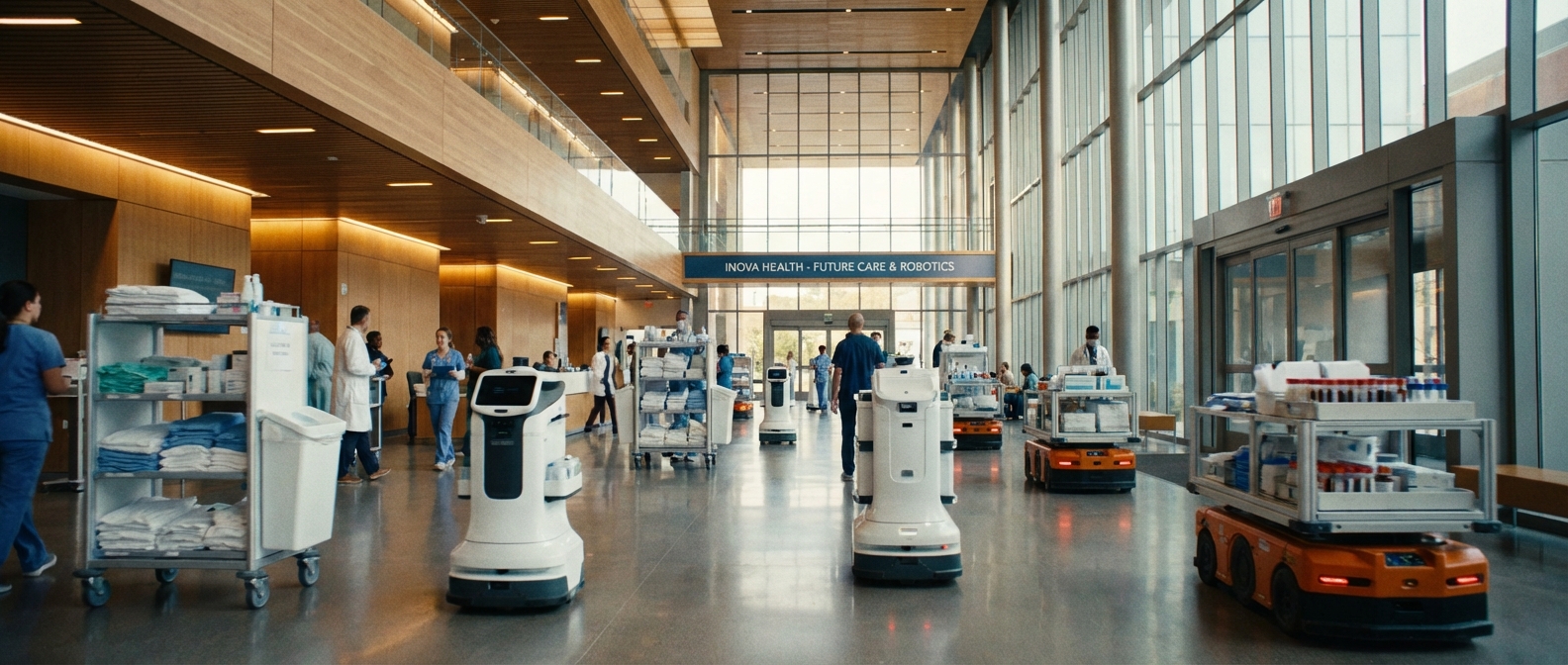
The healthcare sector is undergoing a massive transformation through automation, shifting focus from repetitive logistics to patient-centric care. Advanced robotics are now essential for ensuring operational efficiency, sterility, and mitigating critical staffing shortages.
Why Robotics Matters Here
Staff Burnout
Nurses and orderlies spend up to 30% of their time ferrying supplies rather than caring for patients.
Infection Control
Hospital-acquired infections (HAIs) remain a critical safety issue and financial burden.
Medication Errors
Manual dispensing and transport of medication are prone to human error and tracking gaps.
Surgical Precision
Traditional surgeries can be invasive with longer recovery times for patients.
Lab Turnaround Time
Delays in transporting samples from wards to labs delay diagnosis and treatment.
Heavy Lifting
Moving patients, heavy linen carts, and waste bins causes high rates of staff injury.
Applications in Healthcare & Hospitals
Hospital Supply Delivery
Learn how hospital supply delivery transforms healthcare & hospitals by automating linen, meal, and waste transport.
Explore Application →Disinfection & Sanitization
Learn how autonomous disinfection & sanitization robots utilize UV-C and dry mist to create sterile environments.
Explore Application →Laboratory Sample Transport
Learn how laboratory sample transport ensures STAT specimens reach diagnostics securely and rapidly.
Explore Application →How to Deploy
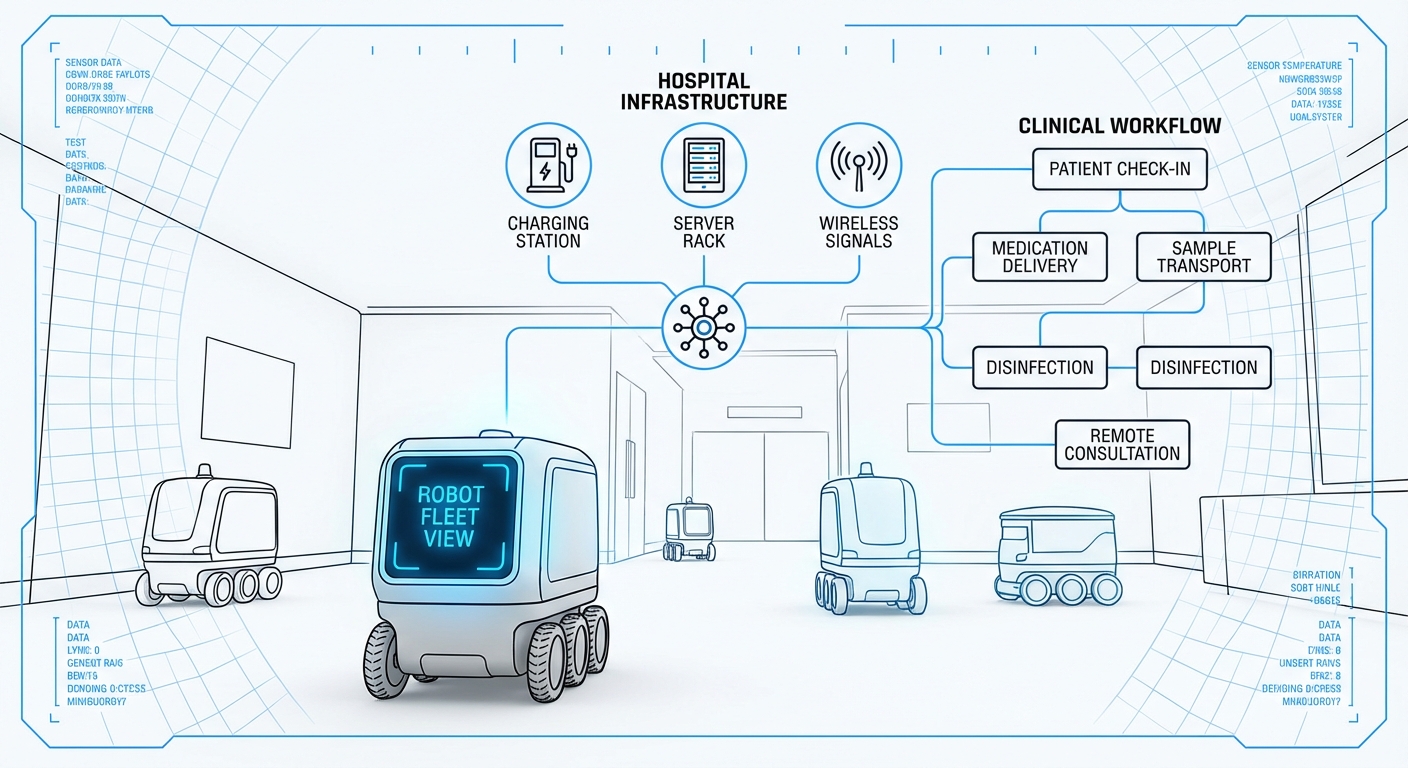
Implementing robotics in a clinical environment requires a "Patient-First" approach. The process begins with a thorough site assessment to map high-traffic zones, elevator logic, and sterile corridors.
Integration with existing Building Management Systems (BMS) and Electronic Health Records (EHR) is crucial. This allows robots to open automatic doors, call elevators autonomously, and track delivery requests directly from nurse stations.
Finally, change management is key. Staff training focuses on collaboration—teaching medical teams that robots are there to handle the "grunt work," liberating them to focus on bedside care and complex medical tasks.
Success Stories
Metro General Hospital
Challenge: Nursing staff were walking an average of 8 miles per shift, mostly for supply retrieval, leading to fatigue.
Result: Deployed a fleet of 15 TUG robots. Reduced nurse walking distance by 40% and saved 2,500 clinical hours annually.
St. Jude's Specialty Wing
Challenge: High turnover time for operating rooms due to rigorous manual sterilization requirements.
Result: Integrated UV-C disinfection robots. Reduced room turnover time by 25% while achieving consistent Log 6 bacterial reduction.
Unity Diagnostics
Challenge: Inconsistent sample delivery times from remote wards caused bottlenecks in testing equipment.
Result: Implemented secure delivery robots. Standardized delivery times to <15 minutes, improving test result availability by 20%.
Oakwood Senior Living
Challenge: Staff shortages during night shifts made it difficult to monitor all hallways and distribute evening meds.
Result: Utilized telepresence and delivery robots for night rounds, improving resident safety monitoring without increasing headcount.
Industry-Specific Questions
Are these robots safe around patients and visitors?
Yes. Healthcare robots are equipped with advanced LiDAR and 3D camera systems that allow them to detect people, wheelchairs, and gurneys instantly. They are programmed to stop or navigate around obstacles safely and operate at safe speeds in patient areas.
Do the robots replace nursing staff?
No. These robots are designed to assist, not replace. By handling non-clinical tasks like transporting linens, meals, and waste, they free up nurses to spend more time on direct patient care and top-of-license activities.
How do robots navigate hospital elevators and automatic doors?
Robots communicate directly with the facility's elevators and door controllers via Wi-Fi or specialized integration modules. They can call an elevator, select a floor, and hold doors open without human assistance.
Is patient data and medication secure during transport?
Absolutely. Delivery robots utilize locking drawers that can only be opened via pin code, ID badge scan, or biometric authentication by authorized personnel. All data transmission is encrypted to meet HIPAA standards.
Can robots transport controlled substances?
Yes, provided the robot has secure, trackable locking mechanisms. Many hospitals use robots for pharmacy delivery, utilizing full chain-of-custody tracking software to log exactly who loaded and unloaded the medication.
How are the robots sanitized between tasks?
Robots are built with materials compatible with standard hospital-grade disinfectants. Staff can wipe them down easily, and some facilities use UV-C bays to disinfect the robots themselves automatically.
What is the ROI timeline for hospital robotics?
ROI typically ranges from 12 to 24 months. Savings are calculated based on labor reallocation, reduction in workplace injuries (from heavy lifting), lower courier costs, and increased operational efficiency.
What happens if the Wi-Fi goes down?
Most autonomous mobile robots store their maps locally. While they may lose the ability to communicate with elevators or the central fleet manager, they can generally complete their current task or safely pull over and wait.
Can they handle Code Blue or emergency situations?
Robots can be integrated with hospital alarm systems. In the event of a fire alarm or Code Blue, they can be programmed to immediately move to safe holding areas to keep hallways clear for emergency teams.
Do you offer training for hospital staff?
Yes. Comprehensive implementation includes on-site training for clinical and support staff to ensure they are comfortable interacting with the robots and understand how to issue commands.
Ready to transform Healthcare & Hospitals?
Join the leading medical facilities upgrading patient care through smart automation.
Explore Our Robots