Food & Beverage Service
Revolutionize hospitality with autonomous delivery robots designed to streamline operations and enhance the guest experience. From bustling restaurants to high-end hotels, ensure precise, contactless, and efficient service while reducing staff fatigue.
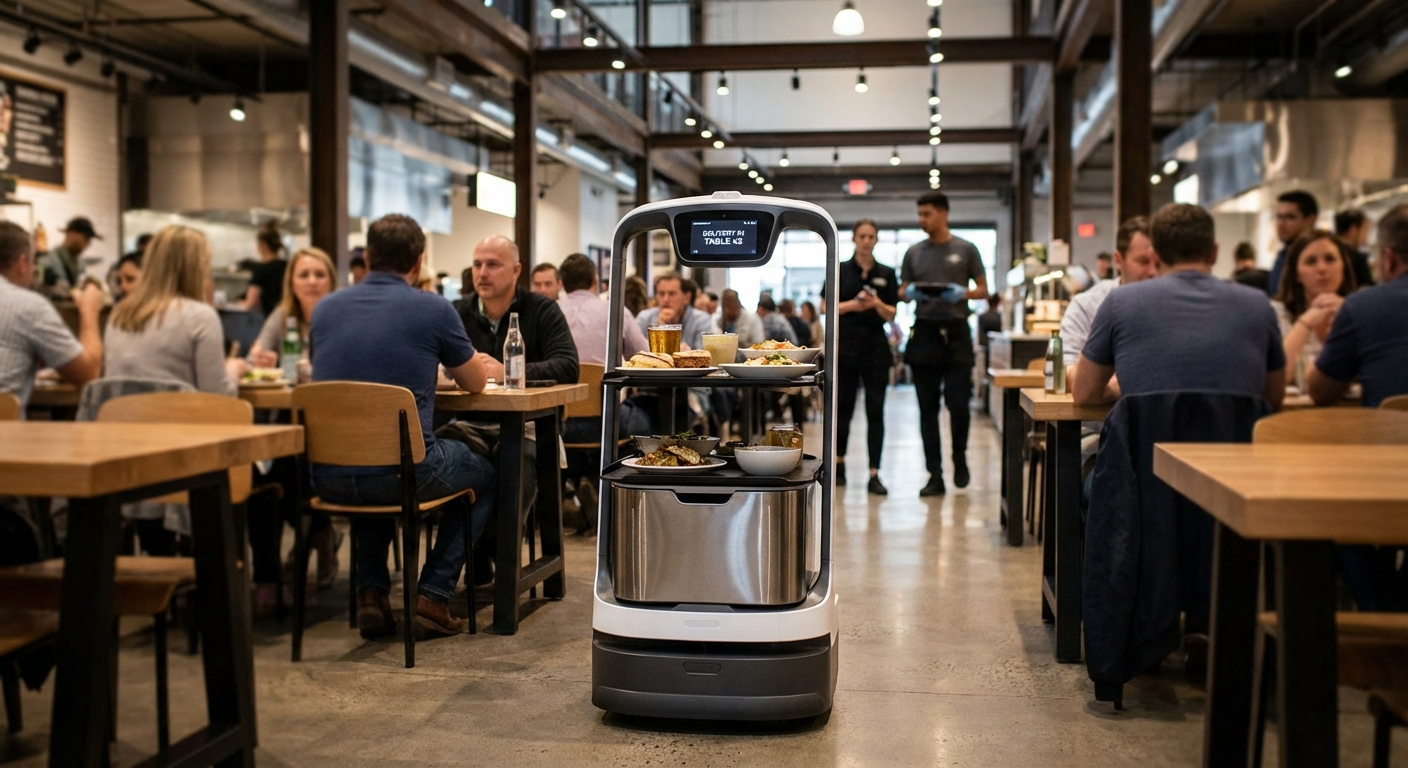
Why Automate Food & Beverage Service?
Enhance Staff Efficiency
Let robots handle the heavy lifting and repetitive transport, allowing your human staff to focus on complex customer interactions and personalized service.
Contactless Safety
Ensure the highest hygiene standards with enclosed delivery compartments and minimized human contact during food transport.
Stable Transport
Advanced suspension and smooth acceleration algorithms prevent spills, ensuring drinks and plated food arrive exactly as the chef intended.
24/7 Availability
Robots don't take breaks or call in sick. Maintain consistent service levels during peak hours, late-night shifts, or holidays.
Dynamic Navigation
Utilizing LiDAR and depth cameras, robots safely navigate crowded dining rooms, avoiding patrons, chairs, and dropped items in real-time.
Data-Driven Insights
Track delivery times, peak usage, and table turnover rates through the robot's integrated dashboard to optimize kitchen workflows.
Seamless Integration Workflow
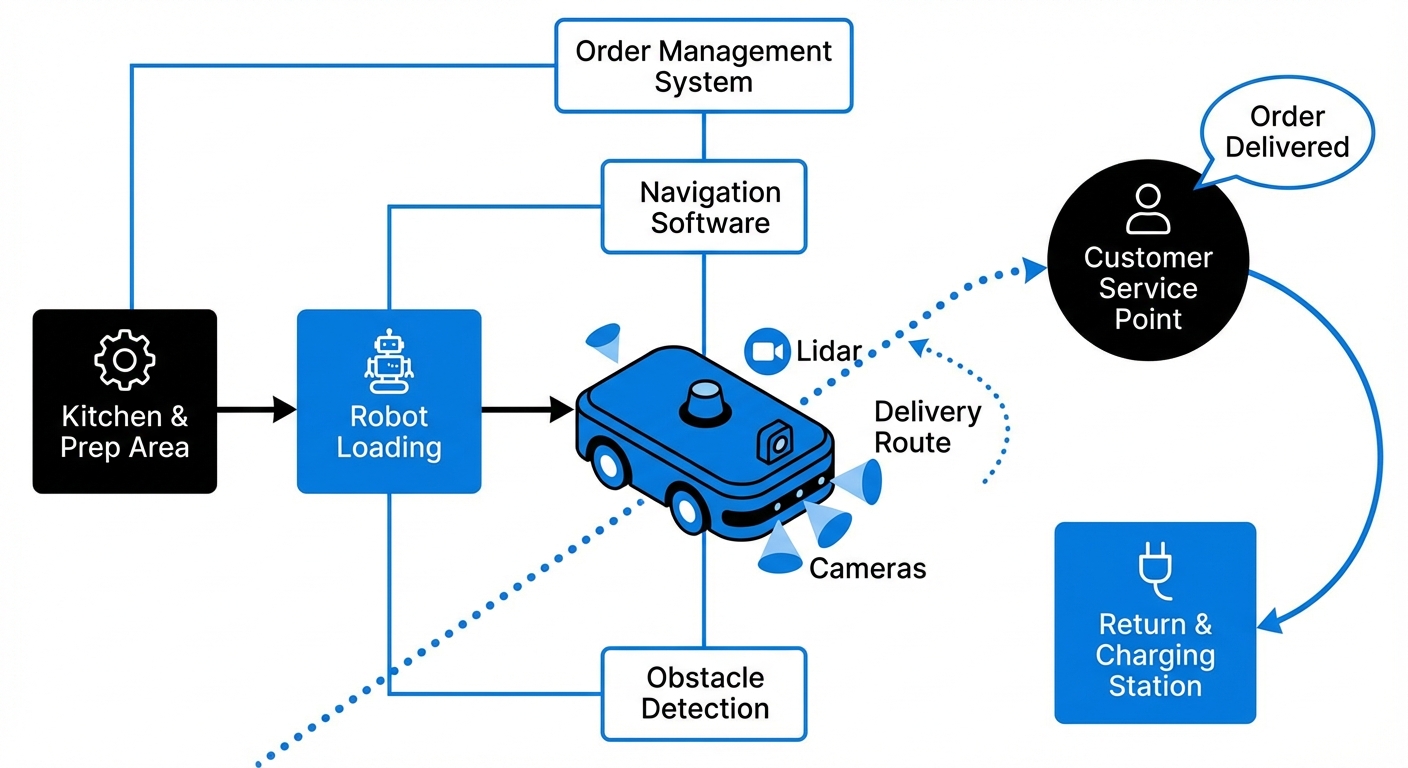
The implementation of food service robots begins with a precise mapping phase. Using SLAM technology, the robot creates a digital twin of your restaurant or facility, identifying tables, kitchen pick-up zones, and charging stations.
Once operational, the system integrates directly with your Kitchen Display System (KDS) or POS. When an order is marked "Ready," a robot is automatically dispatched to the pass. Servers load the trays, select the table number via a touchscreen interface, and the robot departs.
Upon arrival, the robot announces its presence via voice interaction or lighting cues. Sensors ensure it waits patiently if the guest is blocked, and it returns to the charging dock automatically when demand is low.
Where It's Used
Full-Service Restaurants
Used as "runners" to transport heavy trays from the kitchen to the dining zone, allowing servers to remain on the floor attending to guest needs and upselling.
Hotels & Hospitality
Autonomous room service delivery. Robots navigate elevators and hallways to deliver late-night snacks, towels, or toiletries directly to guest rooms.
Corporate Campuses
Mobile vending and cafeteria transport. Robots circulate through office buildings offering coffee breaks or delivering pre-ordered lunches to desks.
Event Venues & Casinos
Cocktail and hor d'oeuvres distribution in large, sprawling floor plans where human staff fatigue is a significant factor.
What You Need
| Connectivity | Wi-Fi 6 (Low Latency) or 4G/5G LTE Module |
| Sensors | 3D LiDAR, RGB-D Depth Cameras, Ultrasonic Arrays |
| Software Stack | ROS2 Navigation Stack, Fleet Management Server |
| Environment | Wheelchair accessible ramps (max 10° incline), min 80cm aisle width |
| Integration | REST API support for POS/KDS Middleware |
| Charging | Dedicated 110V/220V floor space for auto-docking |
Frequently Asked Questions
How do robots handle spilled liquids?
The robots feature independent suspension and smooth acceleration curves specifically tuned for liquids. While they are stable, if a spill occurs due to external impact, the trays are removable and easy to clean. The robot is water-resistant (IP54) but not waterproof.
Can the robots operate on multiple floors?
Yes. Utilizing an elevator integration module (IoT LoRa/Wi-Fi), the robots can wirelessly call elevators, select floors, and enter/exit autonomously. Mapping is required for each individual floor.
Do they replace human servers?
No, they are designed as collaborative "cobots." They handle the low-value task of walking back and forth to the kitchen, while human servers remain in the dining area to take orders, pour wine, and build relationships with guests.
How long is the battery life?
Most models run for 10-12 hours on a single charge. They support "opportunity charging," meaning they automatically return to the dock during slow periods to top up, ensuring 24/7 readiness.
Are they safe around children?
Extremely safe. The LiDAR and ultrasonic sensors have a 360-degree view and a reaction time of milliseconds. They will stop instantly if a child (or pet) runs in front of them.
How much weight can they carry?
Standard models carry between 30kg to 40kg spread across 3 or 4 trays. Heavy-duty models are available for bussing heavy loads of dirty dishes.
Does it require a strong internet connection?
Local navigation is processed on-board, so the robot won't crash if Wi-Fi drops. However, for POS integration, fleet management, and remote calling, a stable Wi-Fi connection is required.
Can we brand the robots?
Yes. The chassis is designed for vinyl wrapping. Additionally, the robot's voice and screen interface can be customized with your logo and brand-specific greeting audio.
What is the setup time?
Mapping a standard 300sqm restaurant takes about 1-2 hours. Configuring table numbers and routes takes another 2 hours. Deployment is usually completed within a single day.
What is the typical ROI?
Depending on labor costs and operational hours, most venues see a Return on Investment within 6 to 12 months due to labor savings and increased table turnover.